As of 7 October 2026, the five e-signature pricing pages most small teams land on sell five different meters, and not one of them prints the number buyers actually ask for. The questions people type — how much does DocuSign cost per envelope, what is DocuSign’s pricing model, adobe sign vs docusign pricing — all ask for a per-document price. The pricing pages answer in seats, allowances, credits and quote-gated tiers. The pricing page is the spec sheet — I have made that argument across thirty pages already — and the problem here is that five vendors define the same unit five different ways.
So this is the conversion table. Every definition, allowance, overage rate and add-on line below carries a check date; where a rate is quote-gated, it is marked unverified and left alone. At the end, one counted bill: a five-person team sending 20 documents a month each — 1,200 documents a year — priced at what each vendor published. For that workload the spread is $600 (Zoho Sign) to $1,800 (DocuSign, before its unpublished per-envelope overage on 700 of those documents). Price per seat is a rumor until you count the seats; price per envelope is a rumor until you count the meter behind the seat.
The meter, defined per vendor, before any price (checked 2–7 Oct 2026)
The unit problem first, because every price row below means nothing until the unit is named. What each vendor’s counter actually ticks:
| Vendor (check date) | What they call it | What one unit is | Whose count is it |
|---|---|---|---|
| DocuSign (7 Oct 2026) | Envelope | One package sent for signature — counted “whether or not the Envelope is signed or completed,” and PowerForms sends count too (vendor FAQ) | Per user, per year on annual plans |
| Adobe Acrobat Sign (limits doc, archived 6 Sep 2026) | Transaction | “An electronic document or collection of related electronic documents” sent to one or more recipients — a bundle to many signers is one unit | Per user, per year |
| Dropbox Sign (7 Oct 2026) | Signature request | A request sent; the paid plans state unlimited requests — “no worrying about overages” | Per sender (“users”), with unlimited sends |
| Zoho Sign (7 Oct 2026) | Envelope = document | The plan cards say “envelopes per user per month”; the comparison table says “Documents per user/month” with the same numbers — one unit under two names | Per user, per month, resets without rollover |
| PandaDoc (pricing page captured 2 Jul 2026) | Document / legally-binding eSignature | “Documents sent” and “Legally-binding eSignatures” are the meter rows | Per seat, monthly — with a caveat in the next section |
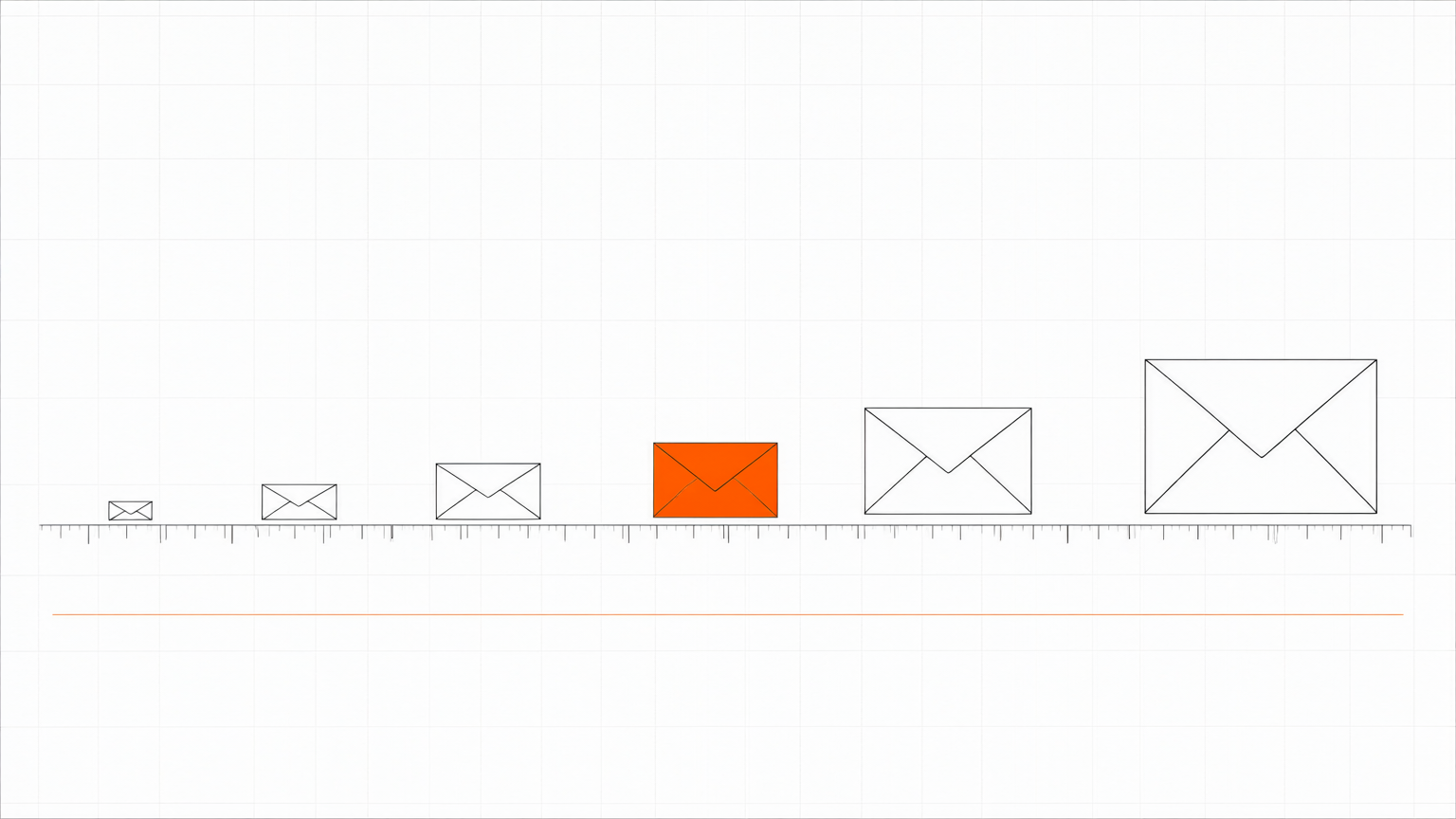
The unit problem first, because every price row below means nothing until the unit is namedThree things that definition table settles. Adobe’s transaction is the loosest unit of the five: one bundle to ten signers is one transaction, so a round of the same agreement priced here is conservative. DocuSign’s envelope is the strictest: a send counts when it goes out, even if nobody signs, even if you void and re-send — a corrected contract is a second envelope. Zoho calls the same thing two names on the same page, and PandaDoc’s page, covered below, contradicts itself about whether the meter exists at all.
The dated seat table: what the entry business tier ships with
The seat price is the line buyers compare. The allowance is the line the seat buys. Both, dated, from each vendor’s own page:
| Vendor, entry paid tier | Price, as published | Included sending volume | The catch on the row |
|---|---|---|---|
| DocuSign Standard | $30/user/month on the annual commitment — $360/user/year (checked 7 Oct 2026) | “Up to 100 envelopes per user per year” on annual plans (10/user/month on monthly plans) | Self-serve caps at 50 users; allowance is annual, the workload below is not |
| Adobe Acrobat Standard for teams | $16.99/user/month, annual plan billed monthly — $203.88/user/year prepaid (per two trackers checked 7 Oct 2026; Adobe’s own page was not machine-readable from this network — see note) | Adobe’s limits doc (archived 6 Sep 2026): Acrobat Standard tier — unlimited transactions, 100 pages, 10 signers per transaction | Two trackers put 150 transactions/user/year on team plans; Adobe’s own doc puts the 150 cap on the Acrobat Sign Solutions licenses. Unverified which applies to a Standard-for-teams license |
| Dropbox Sign Standard | $25/user/month billed yearly — “Starting at $600” is 2 users, i.e. $300/user/year (checked 7 Oct 2026) | Unlimited signature requests | “For more than 5 users, contact our sales team” — self-serve is exactly this team’s size; SMS is a priced add-on (footnote: “additional cost, contact sales”) |
| Zoho Sign Standard | $10/user/month billed annually — $120/user/year ($12 month-to-month; prices read from Zoho’s own pricing-values JSON, 7 Oct 2026) | 25 envelopes per user per month, no rollover | SMS, ID verification, bulk, API all run on prepaid credits sold separately |
| PandaDoc Starter | $19/seat/month billed annually — $228/seat/year (page captured 2 Jul 2026; live page rate-limited on 7 Oct 2026) | Comparison table: unlimited documents and eSignatures on Starter | The same page’s FAQ sells extra documents at $2.00–3.50 each — the contradiction is the row |
Pricing-history aside, because it is the point: Zoho’s annual-versus-monthly spread (10 versus 12 dollars, 20 percent) and PandaDoc’s advertised “save up to 46%” annual discount are the two pages where the sticker you see depends on the commitment you make. DocuSign’s “$30” is only $30 against a full-year commitment ($360 contract even though it bills monthly). That was last quarter’s trick, and it is still this quarter’s price.
The next tier up, kept short: DocuSign Business Pro is $45/user/month ($540/user/year) and is where bulk send, templates, payment collection, web forms and the API stop being “Does Not Include.” Zoho Professional is $16/user/month annual ($192/user/year) and removes the 25-envelope cap — unlimited envelopes. Adobe Pro for teams is $23.99/user/month ($287.88/user/year). Dropbox Premium and PandaDoc Enterprise are quote-only, marked unverified, and stay out of the counted bill.
The overage line: what one more envelope costs
The line the per-user sticker hides, dated and per vendor:
- DocuSign (7 Oct 2026): past the allowance, “each Envelope used in excess is considered an ‘additional’ Envelope that will be billed in a ‘Pay-As-You-Go’ manner, where Docusign will charge a set, per-envelope rate.” The page does not print that rate. The buyer who runs over finds the price at the register, not before it. Unverified — not estimated here.
- Adobe (limits doc, archived 6 Sep 2026): no overage line exists for the unlimited rows; the meter is the cap, and for the Acrobat Sign Solutions licenses the cap is contractual (“unless otherwise stipulated in your contract”). If the trackers’ 150/user/year reading is right for team licenses, the overage is not a rate — it is a throttled wall and a sales call. Both readings recorded; the check date for the difference is the difference.
- Dropbox Sign (7 Oct 2026): none, by design — unlimited sends on Essentials, Standard and presumably Premium (Premium itself is quote-gated, unverified). The overage risk is not volume, it is the per-feature add-ons.
- Zoho Sign (7 Oct 2026): no per-envelope overage in the metered tiers either — past 25 a month the user simply cannot send more without upgrading to Professional. The running meter is the credit pack: $0.10 per credit, blocks of 500 for $50, and the same page’s add-on JSON prices API access at $0.50 per envelope and SMS delivery at $0.20 per delivery.
- PandaDoc (captured 2 Jul 2026): the FAQ sells overage directly — $3.50 per document on Starter Monthly, $2.00 on Starter Annual, $2.60 on Business Monthly — while the comparison table one scroll up says Starter sends unlimited documents. Those two statements cannot both describe the same account. Whichever is current, the overage is the only per-document price PandaDoc prints, and it is on the same page as “no hidden fees.”
And the number the question asks for, before the bill: what does an envelope cost inside the allowance? DocuSign Standard sells $360 of seat for 100 envelopes — $3.60 an envelope, computed, dated 7 Oct 2026. DocuSign Personal ($132/year, 5 envelopes a month, single user) works out to $2.20 per envelope at full utilization. Zoho Standard, at its own 25-a-month cap, is $120 for 300 envelopes — $0.40 an envelope. The same metering approach spans from 40 cents to $3.60 before a single overage dollar is spent.
The add-on ledger: SMS, ID verification, payments, API
Priced per vendor, dated. This is where the cheap seats stop being cheap:
| Line | DocuSign (7 Oct 26) | Adobe (6–7 Oct 26) | Dropbox Sign (7 Oct 26) | Zoho Sign (7 Oct 26) | PandaDoc (2 Jul 26) |
|---|---|---|---|---|---|
| SMS delivery | From $0.36 per delivery, Standard/Business Pro only | Priced via sales, unverified | Add-on on Standard — “additional cost, contact sales” | $0.20 per delivery, via credit packs ($50/500 credits) | Not a published line |
| ID / identity verification | From $2.40 per attempt; 5 one-time bonus verifications on Standard cards | KBA/phone checks: none on Acrobat Standard, 50/year on Sign Enterprise rows (limits doc) | SMS authentication feature on Standard; price behind sales footnote | OTP free; government-ID/KBA via credits and TSPs | Not a published line |
| Payments collection | Business Pro or above (“Does Not Include” below it) | Not a published per-use line, unverified | Not a published line | Enterprise tier, via Zoho Checkout | In-product, not a priced line |
| API / developer | Not included on Standard; included from Business Pro (Enhanced = contact sales) | Standalone Sign Solutions: quote-gated | Separate API plans from $15/mo ($900 billed yearly, entry tier 50 requests/mo, volume tiers to 750+/mo) | $0.50 per envelope (same JSON), Enterprise-tier app access | “Optional” on Business, check on Enterprise — per-document package is talk-to-sales |
The pattern across five pages: nobody bundles the four add-ons into the seat. The sticker is the seat plus an allowance; the ledger is everything the counter does not already include.
The counted bill: five reps, 20 documents each, twelve months (rates as checked above)
The workload, stated so you can re-run it: 5 senders, 20 envelopes per sender per month, 100 an organization-month, 1,200 envelopes a year. No SMS, no ID checks, annual billing everywhere, add-ons excluded and priced separately where a team plausibly needs them. Every figure is the seat table and the overage line above, multiplied — 5 seats × per-seat-year, plus overage at published rates.
- DocuSign Standard — 5 × $360 = $1,800
- Adobe Acrobat Standard for teams — 5 × $203.88 = $1,019.40
- Dropbox Sign Standard — 5 × $300 = $1,500 (the self-serve ceiling exactly)
- Zoho Sign Standard — 5 × $120 = $600
- Zoho Sign Professional (safe read) — 5 × $192 = $960
- PandaDoc Starter — 5 × $228 = $1,140
| Configuration | Seats × year | Overage on 1,200 | Annual bill |
|---|---|---|---|
| DocuSign Standard | 5 × $360 = $1,800 | 700 envelopes over the 500 included — rate published nowhere: unverified | $1,800 + 700 envelopes at a per-envelope rate the published page does not carry |
| Adobe Acrobat Standard for teams | 5 × $203.88 = $1,019.40 | 0 if Adobe’s own limits doc governs (unlimited); if the trackers are right, 450 over a 750 cap → the honest config is Pro for teams, 5 × $287.88 = $1,439.40 | $1,019.40, or $1,439.40 on the cautious read |
| Dropbox Sign Standard | 5 × $300 = $1,500 (the self-serve ceiling exactly) | 0 — unlimited by page | $1,500. First-year promo read on the same page ($17.50/user/mo, 30% off year one) lands it at $1,050 — promo, not list |
| Zoho Sign Standard | 5 × $120 = $600 | 0 — the 25/user/month cap clears 20/user/month with 5 to spare, no rollover | $600 |
| Zoho Sign Professional (safe read) | 5 × $192 = $960 | 0 — unlimited envelopes | $960 |
| PandaDoc Starter (if unlimited is real) | 5 × $228 = $1,140 | 0 on the comparison table; on the FAQ’s own $2.00/document annual overage, 700 × $2.00 = $1,400 | $1,140, or $2,540 if the meter is real |
| PandaDoc Business | 5 × $588 = $2,940 | 0 (table), same doubt | $2,940 — priced out of this workload |
Read the arithmetic line: for identical paperwork, the cheapest counted answer is Zoho Standard at $600/year and the most expensive named answer is DocuSign at $1,800 before its unpublished overage on 58 percent of the volume. That is the same $1,200 of envelopes billed from 50 cents an envelope (Zoho, blended) to $1.50 (DocuSign, seats-only, overage on top of it) — and DocuSign is not the outlier for being metered, it is the outlier because the meter is annual and this workload is monthly: 240 envelopes per user per year against a 100-envelope allowance, every single year.
The cheapest working vendor, for this counted workload
For a five-person sales team at 20 documents a sender a month, the counted winner is Zoho Sign Professional at $960/year — not Standard at $600, because Standard leaves 25 percent headroom (25 envelopes a month against 20 sent) with no rollover, and the first busy month prices the difference anyway: at Professional the whole team is unlimited and the bill is still the lowest unlimited-seat column on any of these five pages. What you give up, named per vendor, because “cheapest” without a trade-off list is a listicle:
- On Zoho: the running credits ledger. SMS at $0.20 a delivery and API at $0.50 an envelope are metered even when envelopes are not, and the credit pack is $50 up front. Payments need the Enterprise tier ($22/user/month annual). And the white-label line needs 10+ users, so this team never gets it.
- On Zoho vs Adobe: you give up the PDF editor in the seat. Adobe’s Standard-for-teams seat is Acrobat; if the team already pays for Acrobat, the signing marginal cost is zero and $1,019.40 is the honest floor on Adobe’s own doc.
- On Zoho vs Dropbox Sign ($1,500): you give up the “no meter at all” simplicity and get credits instead, and Dropbox’s audit-trail language (“non-editable… every action tracked and time stamped,” on every plan) is plainer than anything Zoho’s cards say. Dropbox also stops self-serving you at 5 users — hiring a sixth sender is a sales call, which is a growth tax in itself.
- On Zoho vs PandaDoc: you give up documents-as-sales-artifacts (CPQ, templates with content, the editor). PandaDoc prices that product at $2,940 for this team, and its Starter contradiction makes the $1,140 number unverifiable from their own page.
- And DocuSign ($1,800 + overage)? Nobody at this size is buying DocuSign for the per-envelope economics. The counterparty recognition, the 1,000-integration catalog and the IAM roadmap are what the premium actually buys, and if the inbound contract volume makes void-and-resend noise a real cost, the strict envelope counter is the thing to price, not hide. Is DocuSign expensive? At $3.60 an envelope inside the allowance on Standard — yes, on the published arithmetic, dated 7 October 2026. Whether it is expensive for you is a different question — the same arithmetic that makes the cheapest Salesforce alternative cheap is what makes Zoho the answer here — and the watchlist below is where that gets answered.
The exit test: taking the paper with you (dated)
The renewal test I run before any of these seats is bought — can the last five years of signed paper and its audit trail leave the building from the entry tier:
- DocuSign (7 Oct 2026): completed envelopes and their audit trails are visible and downloadable in-app on every tier; the row that matters is the API — “Does Not Include” on Personal and Standard. Bulk, programmatic export starts at Business Pro or a sales conversation. Manual download works; leaving at scale is a paid feature.
- Adobe (helpx, archived 6 Sep 2026): agreement history — the event trail — is in-product on every Acrobat tier; the API is the Acrobat Sign Solutions (quote) line again. Same shape as DocuSign: the trail travels, the bulk pipeline is gated.
- Dropbox Sign (7 Oct 2026): the clearest audit language of the five — non-editable, time-stamped, stated across the tier feature list on the pricing page. Completed PDFs come back to the sender and signer automatically. No export gate found on the tier’s own page.
- Zoho Sign (7 Oct 2026): “Audit trail and certificate of completion” checked on every tier, Free included; cloud export to WorkDrive/Drive/OneDrive/Box on every tier. The API is the credits meter, not the gate.
- PandaDoc (captured 2 Jul 2026): signature certificate documented; the API row is “optional” on Business and a full check on Enterprise — so on Starter the exit is manual, as at DocuSign.
Nobody imprisons the documents. Two vendors (DocuSign, PandaDoc) price the bulk exit above the entry tier, and Zoho prices the API in credits. That is the difference between a lock-in and a toll booth, and it is visible before the contract, which is the whole point of reading the pricing page as the spec sheet.
What to watch before your next renewal (checked 7 Oct 2026)
- DocuSign’s printed page vs printed rate. The Pay-As-You-Go per-envelope rate has no published figure — if a rate ever appears on the pricing page itself, the overage line stops being quote-gated and this bill re-renders. Watch the pricing page diff, not the press release.
- Adobe’s 150 transactions per user per year line. The limit doc ties it to “user licenses” on Sign Solutions; two independent trackers (7 Oct 2026) attach it to Standard-for-teams. Whichever license you hold decides whether your seat is unlimited or capped — ask in writing, and get the contract language, because Adobe’s doc says “unless otherwise stipulated in your contract.”
- PandaDoc’s two self-contradicting sentences. Unlimited table versus $2.00–3.50 FAQ, both dated 2 July 2026 on the same URL. Whichever way the page resolves, it decides whether Starter is $1,140 or $2,540 for the counted team.
- Zoho’s credit line. $0.10 per credit, SMS at $0.20, API at $0.50 an envelope — all on the pricing-values JSON the page itself reads from. A credits repricing changes the cheap answer without touching the $10 sticker. Watch the JSON, not the ad.
- Dropbox’s five-user wall. The self-serve ceiling is exactly this team’s size. The sixth hire turns $300/user/year into a quote. That is the renewal event to model a year early.
Check discipline for this article: DocuSign, Zoho and Dropbox Sign read live on 7 October 2026; Adobe’s limits table from its own helpx capture of 6 September 2026 (Adobe’s price page resisted this network — the $16.99/$23.99 team prices are two-tracker-verified, flagged as such); PandaDoc from a 2 July 2026 capture of its own page after live re-checks failed. Zoho’s page ships seven currency tabs; only the USD tab was read, and no frame was averaged into another. If your own account form shows different numbers than dated here, the account form wins — and it is the diff between the two that tells you what changed.